
The Amish Way of Working Together
We hope this early August morning finds you well. After the hot stretch that settled over the Heartland last week, the cooler air and the welcome rains have brought a sense of calm to the community. Gardens perked up, the fields softened, and families found themselves grateful for the break in the weather. As we begin this new series about how the Amish work together, we wanted to share a few stories that show how deeply this way of life is woven into daily routines.
In Amish communities, helping is not an event. It is a way of moving through the day. Neighbors often arrive without being asked, guided by a quiet understanding that someone might need an extra hand. One woman remembered the day her brother-in-law showed up at her door. She was a widow then, and her woodpile had dwindled to the last few pieces. Without a word, he came to cut wood until the pile stood tall again. She said she felt thankful in a way that stayed with her for years.
Much of this help happens without messages or calls. Families communicate needs through simple conversation. Someone might mention they are maxed out, or a neighbor might stop by and ask if help is needed. It is a gentle way of speaking, but everyone understands what it means. Children learn this early. They watch their parents step in when a need appears, and before long they begin doing the same. One woman remembered sending soup to a neighbor with sick children. It was the moment she realized she had become the helper instead of the one being helped.
Cutting firewood is one of the tasks neighbors gather for most often. Woodstoves are central to Amish homes, and everyone needs a steady supply. When the sound of saws begins on one property, others often join in. The work goes faster, and the shared effort brings a sense of unity. Outsiders might never guess that neighbors also help with nighttime care of the elderly. Families take turns, making sure no one carries the burden alone.
There are lighter memories too. One woman recalled her earliest experience of neighborly help. Aunts came to braid her sisters’ hair the night before moving day. Her own hair was braided tightly, and she had trouble sleeping that night, but she remembered the laughter and the sense of togetherness. Even in small moments, helping was present.
Food often plays a quiet role. Sometimes neighbors bring a dish along, but more often the family receiving help serves the meal. It is a way of saying thank you without gifts or payment. Gratitude is expressed in simple phrases. One woman remembered her mother’s favorite expression, “Thanks a million,” spoken with sincerity that needed no embellishment.
Weather brings its own kind of cooperation. During tornado warnings, neighbors without basements often head to the homes that have them. Families gather in the cool safety of the lower rooms, waiting out the storm together. After storms pass, neighbors arrive to help with cleanup, even before being asked. One woman said the most meaningful act she ever witnessed was when neighbors came to help a family after a severe storm, arriving with quiet purpose and steady hands.
These stories remind us that helping is not only about tasks. It is about seeing one another clearly. One lesson shared from childhood was that help may be needed more often than anyone realizes. That awareness shapes the way Amish communities move through the Seasons, always watching for the small signs that someone could use a hand.
As we begin this new series, we hope these glimpses into daily life bring you a sense of peace and connection. The cooler weather and gentle rains have given families a chance to catch their breath, and the shared work continues as it always has, with kindness at its center.
Stories from Our Amish Basket Weavers
Here are a few of the most notable moments from the families who weave the beautiful baskets featured on AmishBaskets.com , shared with us this week.
The Mast Family
The Mast family shared a story from last Sunday morning that brought plenty of conversation to their porch later in the day. Their eleven‑year‑old son had hitched their easygoing horse to the family surrey before church, then stepped inside to read a book while waiting for everyone else to get ready. The horse stood quietly for a while, but when the family stepped out to leave, the surrey was gone. The boy hurried to saddle his pony and rode down the road, where he found the horse ambling along about half a mile from home, surrey in tow and looking quite content with her unexpected adventure. It gave the family a good laugh and reminded them how even the calmest horses sometimes decide to take a little Sunday stroll of their own.
The Yoder Family
The Yoder family had quite a surprising experience this week. Some boys visiting another farm discovered a drawer full of old whistles in the shop and decided to test them out. The shrill blasts were far too loud for indoors, so they were sent outside, where the sound carried across the yard. The family raised Angus cattle who had never heard anything like it. Startled by the piercing noise, the entire herd stampeded through a heavy steel gate, bending it until the latch broke and the post gave way. All twenty‑eight cattle scattered across the fields. There was no use chasing them, so everyone waited for them to settle. An English neighbor was hired, and with the Yoders helping, eighteen were loaded into his truck and taken home. Six more wandered back on their own, and the family is keeping watch for the rest. It was a week they will not soon forget, and the whistles have since been tucked safely out of reach.
"The person who sows seeds of kindness will have a perpetual harvest."
- Amish Wisdom Overheard in the Community.
Handwoven by Amish Families
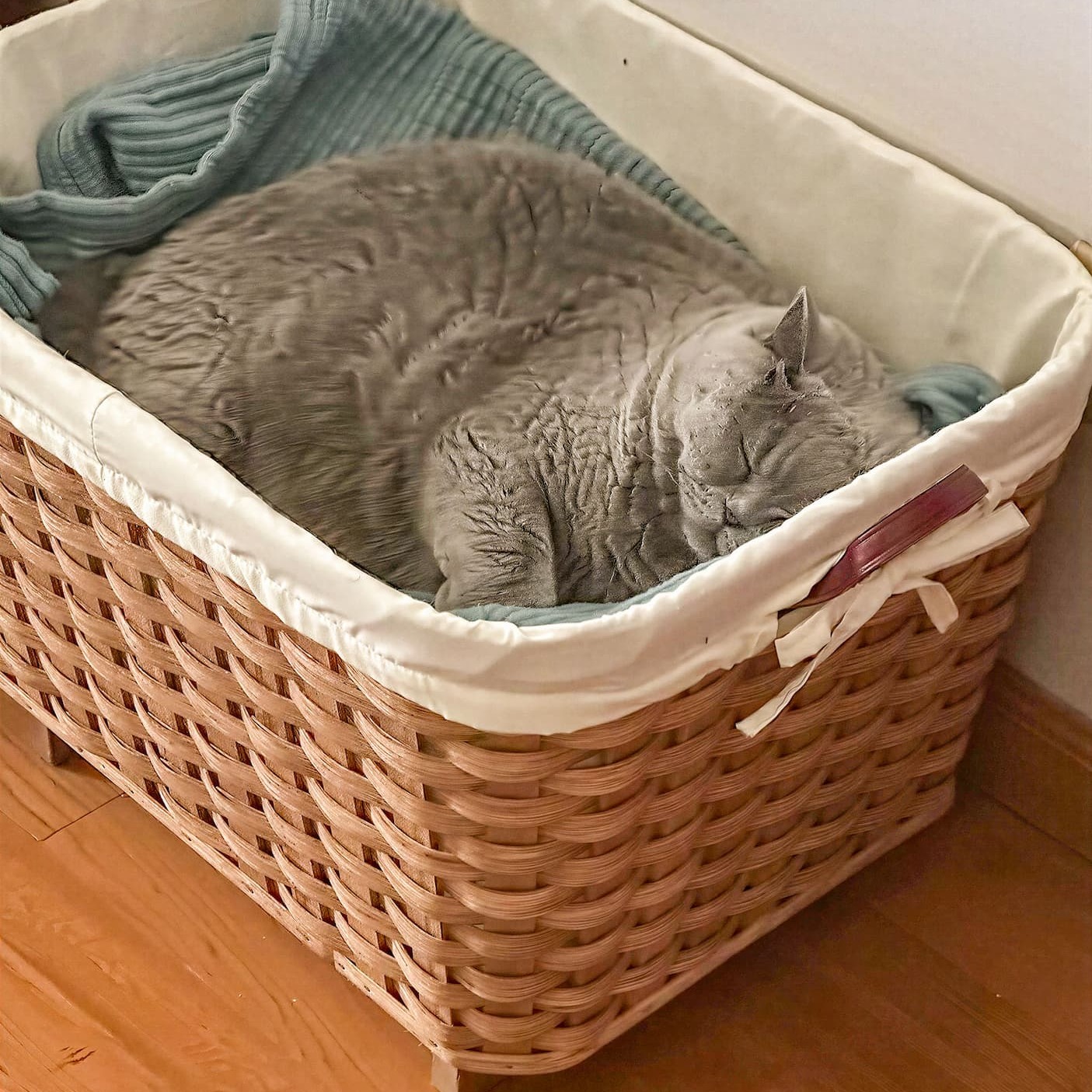
Throw Blanket Basket
“Perfect Basket - This blanket basket is well crafted, and beautiful. I recommend 100%. My British short haired cat says it’s the best bed ever!”
- Marsha M. (Verified Buyer)