
The Lessons That Shape an Amish Childhood

As we welcome February into the Heartland, we hope this note finds you warm and well. It has been another week of frigid mornings, with temperatures dipping below zero and staying there long enough that many Amish families have begun cutting ice for their ice houses. This is the time of year when neighbors gather at frozen ponds to harvest blocks that will keep food cool through the summer. Some families have also turned to a newer method that has quietly spread through a few districts. With so many nights well below freezing, they set out buckets of water outdoors, letting the cold do the work for them. By morning, each bucket holds a solid block of ice, ready to be stored. It is a simple but effective way to fill an ice house when the weather cooperates, and it has become a welcome option for families who may not have the time or help to cut ice from a pond.
This week in our education series, we are looking at the subjects Amish children study and how those lessons are taught in their one-room schoolhouses. Much of what happens in these classrooms reflects the community's values. Reading, writing, and arithmetic remain the foundation, just as they have for generations. One Amish woman shared that history was always her favorite subject because it fed her love of reading. That love of reading is something teachers work hard to pass along. They make handwriting and neat work meaningful by offering small rewards, and they choose stories that spark imagination without being frightening. Adventure books are especially popular, as long as they stay gentle enough for young minds.
Math becomes more challenging in the upper grades, and many children find those lessons the hardest. Still, the approach remains practical. Calculators are not allowed, so students learn to solve problems with their own reasoning. They work through real-life examples that will serve them well later, whether they are measuring lumber, planning a garden, or balancing household needs. Geography lessons often come in the form of worksheets filled with map mazes, something many former students remember fondly. German is taught one day a week, usually on Fridays, and while Pennsylvania Dutch is spoken at home, learning formal German helps children read church materials and understand their heritage.
Penmanship is still valued and taught through penmanship books that guide students toward clear and careful writing. Teachers remind them that neat handwriting is not only polite but practical, making letters and records easier to read. Health lessons are introduced in the upper grades, where students work through a simple health book covering hygiene and basic well-being. When a child struggles with a subject, the response is gentle and communal. Some are tutored by the teacher or by others in the community during the summer months. A few schools offer special education classes, and in some cases, a driver is hired to take a child to a neighboring district where a particular special-education class is available.
Memorization plays a steady role in learning. Children memorize weekly Bible verses, multiplication tables, and other passages that strengthen both their minds and their sense of discipline. Hands-on projects brighten the school year as well. Winter brings paper snowflakes and chains to decorate the classroom, while spring and fall offer their own seasonal crafts. Teachers keep lessons interesting across multiple grade levels by teaching each grade separately when needed, but combining classes when they are practicing similar skills, such as reciting multiplication tables or working through memorized material.
Many Amish parents still believe that reading is the most important subject of all. One woman recalled her father saying that a child who reads well will be able to grasp other subjects more easily, while a child who struggles with reading will often struggle in other subjects as well. It is a simple idea, but one that has shaped Amish education for generations.
This week, we wanted to share something a little different from our usual family happenings and look outside the families in the community who are crafting our baskets.
With the long stretch of nights below zero, a few Amish families in the community have turned to a clever way of filling their ice houses. Instead of cutting blocks from the ponds, they set out buckets of water to freeze in the open air. Once the water turns solid, the ice is popped out and carried to the ice house, where the blocks are stacked tightly together to last through the warm months ahead.
The Detweiler family, known to many of you for the homemade candies Iva and her daughters craft, has been especially busy with this method. Their buckets sit near the house, catching the cold, night after night. Depending on the size of an ice house, a family may need to repeat the process several times, making it a multi-day process.
We have heard that in a few other Amish communities, buckets can even be rented by the day. There is also a small side market that helps families once the warm months arrive. When an ice house begins to run low in the summer, some retired English folks have turned freezing five-gallon buckets into a simple way to earn a little extra income. They freeze the buckets in their deep freezers and deliver them for five dollars each. It is a practical idea that shows how small cottage‑style efforts often grow naturally around Amish life. Whether it is winter ice harvesting or summertime ice delivery, families always seem to find a way to meet the needs of the season.
Here's a picture of the Detweilers' buckets after a night of deep cold this past week. It is a quiet reminder of how resourceful and steady these families are during the heart of winter.
"The man that minds his own business usually has a good one."
Amish Wisdom
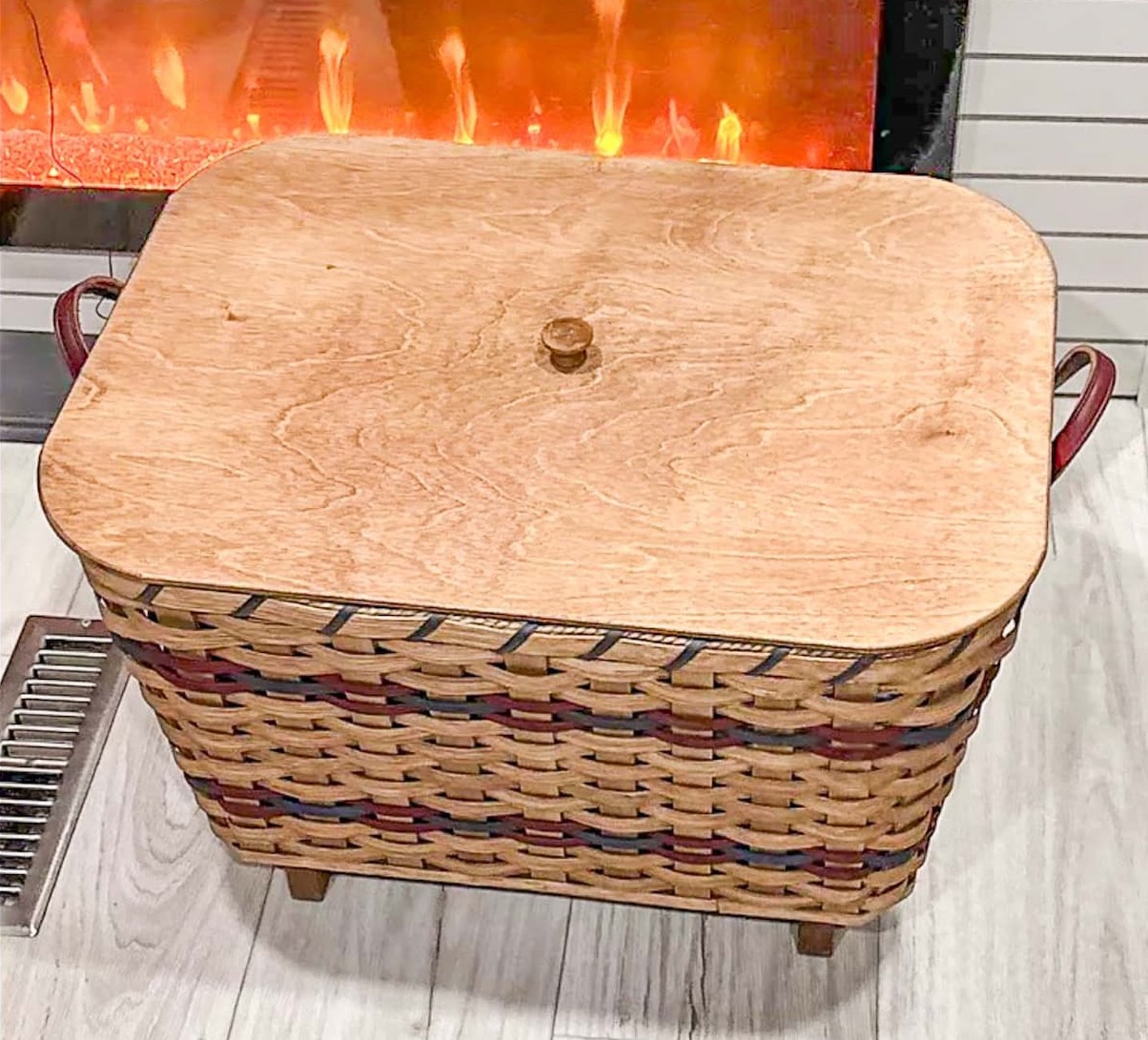
Handwoven by Amish Families
Throw Blanket Basket
“A Lovely addition to our home: Such a beautiful basket! I bought this particular piece to adorn my livingroom as a holder of oversized books and notebooks that don’t fit in my new bookcase-which is a tower style. We live full time in our rv and space is limited. This lovely basket is a blessing from the special Amish family who made it ♥️”
- Karen A (Verified Buyer)