
How Schools Stay Running Through Every Season
Warm greetings from our Amish community here in the Heartland. Spring has continued to bring generous moisture, and families spent much of the week watching the skies for openings of sunshine so they could rake and mow their yards for the first time this year. The grass has taken on that bright Spring color that always feels like a fresh start, and the schoolhouses across the community are settling into their final stretch of the school term. As we continue our series on Amish schooling and education, this week, we are sharing how these small schools are administered and cared for throughout the year.
Amish schools are simple buildings, but they are supported by a deep sense of shared responsibility. Funding comes from school taxes paid by church members, and when a new schoolhouse needs to be built, the entire community usually helps cover the cost. This shared investment reflects the belief that every child deserves a steady place to learn and that the school belongs to everyone, not just to the families of children currently attending.
When something breaks, repairs are handled quickly and without fuss. The school board usually takes the lead, but it is not uncommon for a teacher’s father or another family member to step in if needed. These repairs can be as small as fixing a loose hinge or as memorable as replacing a shattered basement window after a ball sailed through it during a picnic day. In that case, the window was replaced, and a guard was installed to protect it and several nearby windows. It is the kind of story that stays with a community for years, partly because it could have been far worse, and partly because it shows how everyone pulls together to keep the school safe.
Preparing for Winter is another shared effort. Once a year, a community work bee is planned to cut firewood for the school. The woodpile is kept stocked, and the stove is banked carefully so the building stays warm. The closest neighbor to the school may stop by in the evening to tend the stove and return in the morning to start it again. Water faucets may be left dripping on the coldest nights to keep them from freezing. These small acts of care are part of what makes the school feel well-tended.
Cleaning is also a regular part of school life. Weekly cleaning is usually done by the teacher and the scholars, but before the school term begins, the school mothers and the girls plan a thorough cleaning day. Ceilings and walls are washed, windows and screens are cleaned, and every piece of furniture is wiped down. Floors, sinks, and desks are scrubbed until the building feels fresh and ready for a new year. During the Summer, horses and other livestock are often pastured on the school grounds, so the yard may need to be raked before classes resume.
Supplies are purchased with money from the school fund, and the teachers meet before the first day to assign and mark books for the scholars. Families remove livestock from the pasture, and everyone pitches in to make sure the schoolhouse feels welcoming. Students help with chores throughout the year, including cleaning blackboards, shaking carpets, sweeping floors, and running small errands to nearby neighbors when extra towels or soap are needed.
Emergencies are handled with the same steady cooperation. One Amish woman remembered a time when a girl at school had a seizure. Children scattered in different directions to find help, and one of the English neighbors had already called 911 by the time the message reached the nearest Amish home. This kind of quick response reflects the broader principle that schools must be prepared for unexpected events. Emergency planning is an important part of school safety everywhere, and thoughtful preparation helps staff and community members respond quickly when needed.
Snow days are rare, since a horse and buggy can travel through drifts that would stop a vehicle. Each family provides or arranges its own transportation, and neighbors often work out shared plans. The school board handles extra tasks such as snowplowing when needed, and the community may gather to rake the yard in Spring if Winter has been especially hard on the grounds.
What makes an Amish schoolhouse feel well cared for is not any single task, but the willingness of everyone to participate. When families, teachers, and neighbors all do their part, the school becomes more than a building. It becomes a place shaped by many hands, each one adding something small but meaningful.
Stories from Our Amish Basket Weavers
Here are a few of the most notable moments from the families who weave the beautiful baskets featured on AmishBaskets.com, shared with us this week.
The Yoder Family
The Yoder family had quite a week thanks to the neighbor who has long been known for being a little too eager with his matchbook. Every community seems to have one person who believes a good fire can solve most problems, and this gentleman has earned that reputation more than once. His latest attempt at burning off a ditch got away from him when the bottom of a telephone pole caught fire. He did not notice until the pole was leaning over the road, held up only by the highline wire. The utility crew arrived quickly and replaced the pole, and the Yoders and other neighbors are hopeful that once he receives the bill, he may take a more cautious approach to burning this Spring. Folks around here say nothing teaches carefulness quite like paying for a new pole.
The Borntrager Family
The Borntrager home was lively last Sunday evening as they hosted the community singing, and like many families after a big gathering, they found themselves with more leftovers than they could use. Instead of letting the food sit, they decided to take a hot lunch to the school on Monday. Several families joined in, filling the gaps with their own dishes. The meal turned into a feast with potato casserole, salad, pork and beans, dressing, glazed ham, tapioca with jello and apples, and a frosted cake. A widow who lives a short walk from the school even joined the children for lunch. It was the kind of simple, shared moment that brings a community together and gives the scholars a memory to carry with them.
"A person who knows everything still has a lot to learn."
- Amish Wisdom Overheard in the Community
Handwoven by Amish Families
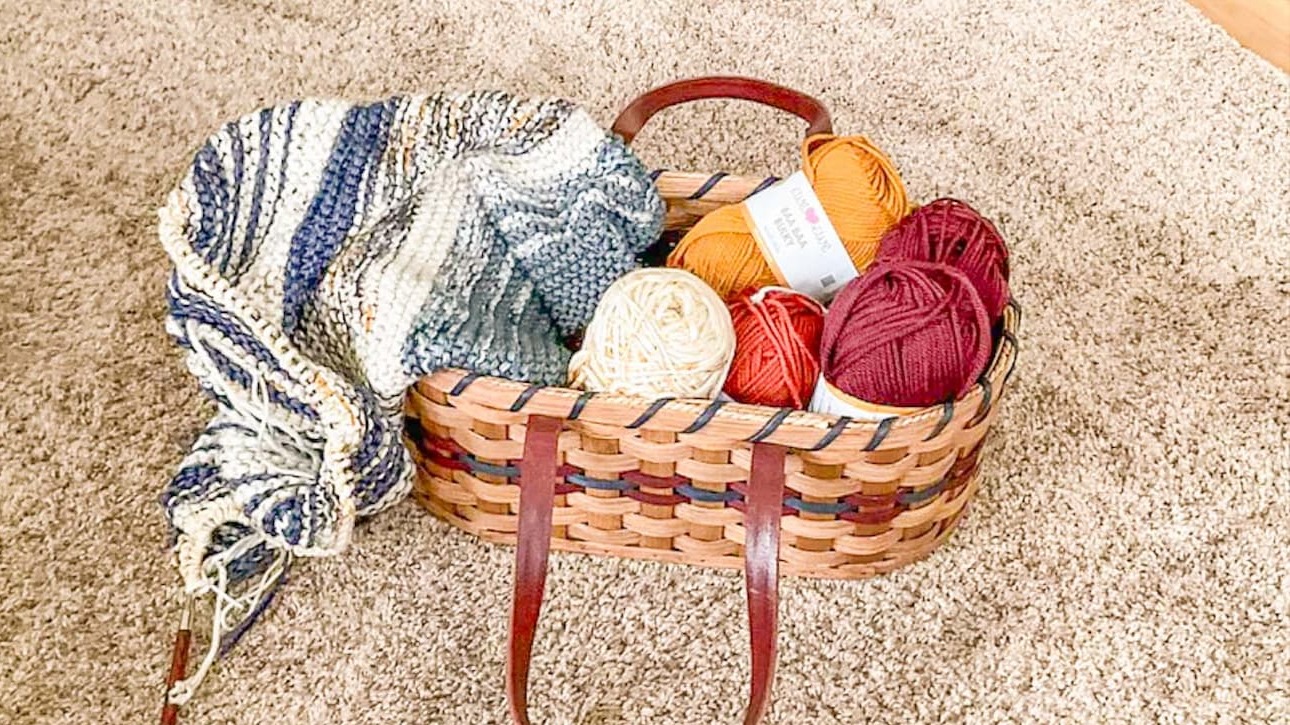
Vintage Yarn Caddy
“My favorite basket - Love this Caddy! I have four knitting pieces from Amish Baskets. I love each one for their superior craftsmanship and functionality. They are beautiful and I use them daily.”
- Mary D. (Verified Buyer)