
Discovering the Languages of the Amish
We hope this newsletter finds you well and enjoying the beautiful summer days. As we move through August, the season's warmth brings a sense of community and togetherness that is truly special. This week, we are excited to share insights into the languages spoken within our Amish community, a topic that reflects a rich cultural heritage in daily life.
In our Amish community, language is vital in preserving traditions and fostering a sense of identity. From birth, children are immersed in the German dialect known as Pennsylvania Dutch, which we simply refer to as German. This language is the cornerstone of daily interactions and is spoken most frequently within Amish homes and community gatherings.
As children reach the age of six, they begin their formal education and are introduced to the English language. This bilingual upbringing allows them to navigate both the Amish and broader American world with ease. At school, from Monday to Thursday, English is the primary language of instruction, while Fridays are dedicated to teaching and speaking German. This balanced approach ensures that Amish children are proficient in both languages, maintaining a strong connection to their cultural roots while also being able to engage with the broader society.
A typical day in our community is a harmonious blend of languages. At home, German is predominantly spoken, creating a familiar and comforting environment. However, when it comes to reading books to children, English often takes precedence, providing them with a broader range of literature and learning opportunities. This dual-language approach enriches their educational experience and helps them develop a well-rounded perspective.
Religious services hold a special place in Amish hearts, and language plays a significant role in those gatherings. High German and German are used during services, linking them directly to their religious roots and the historical context in which their faith was forged. This linguistic tradition is essential for preserving their ethnic identity and ensuring their spiritual practices remain deeply connected to their heritage.
Teaching children multiple languages within the community is a collective effort. Teachers at Amish schools are dedicated to imparting both German and English, ensuring that the next generation is well-versed in both languages. This commitment to bilingual education is a testament to the value placed on linguistic heritage.
There are specific occasions where one language is preferred over another. For instance, at church, using English is discouraged to maintain the sanctity and tradition of services. This practice reinforces the importance of the German dialect in religious and cultural contexts.
Maintaining proficiency in multiple languages requires continuous effort. Reading books in both German and English is a common practice that helps them stay fluent and connected to both linguistic worlds. However, switching between languages can present challenges, such as mixing English words into German conversations and vice versa. Over time, some German words have been lost and replaced with English equivalents, but the Amish strive to preserve the purity of their dialect as much as possible.
Here are a few happenings the families dedicated to weaving the beautiful baskets featured on AmishBaskets.com have shared with us this week.
The Mast Family
Rosa and her daughters have been busy canning this summer. They have preserved about 30 quarts of raspberry pie filling, 40 quarts of blackberry pie filling, and 35 quarts of green beans. Additionally, they have canned 13 quarts of sauerkraut, which Rosa prefers not to heat or process. Wild turkeys venturing close to their barn intrigued the Mast children several days this week. This is quite unusual, as their dogs usually keep wildlife at bay.
The Yoder Family
The Yoder family took a trip to Rebecca's family's community last week. During their visit, they attended Baptismal services for her nephew, Chrissie, and other applicants. They also brought back a bounty of tomatoes from her sister's greenhouse and her parents' garden to make more salsa for their family. The younger children were thrilled with a new set of memory cards and a floor puzzle they received as gifts during their stay.
The Gingerich Family
The Gingerich family has been enjoying the surprise lilies that bloomed in their yard a couple of weeks ago. They noted that the moderate temperatures and low humidity have helped keep the lilies looking beautiful. Unfortunately, they lost a lovely maple tree in their yard after it split down the middle during a thunderstorm several weeks ago. Their cousin believes it might be possible to repair the tree with strong iron bands or screws. Only time will tell if this effort will be successful.
"One of the happiest moments ever is when you find the courage to let go of what you can't change."
Amish Wisdom
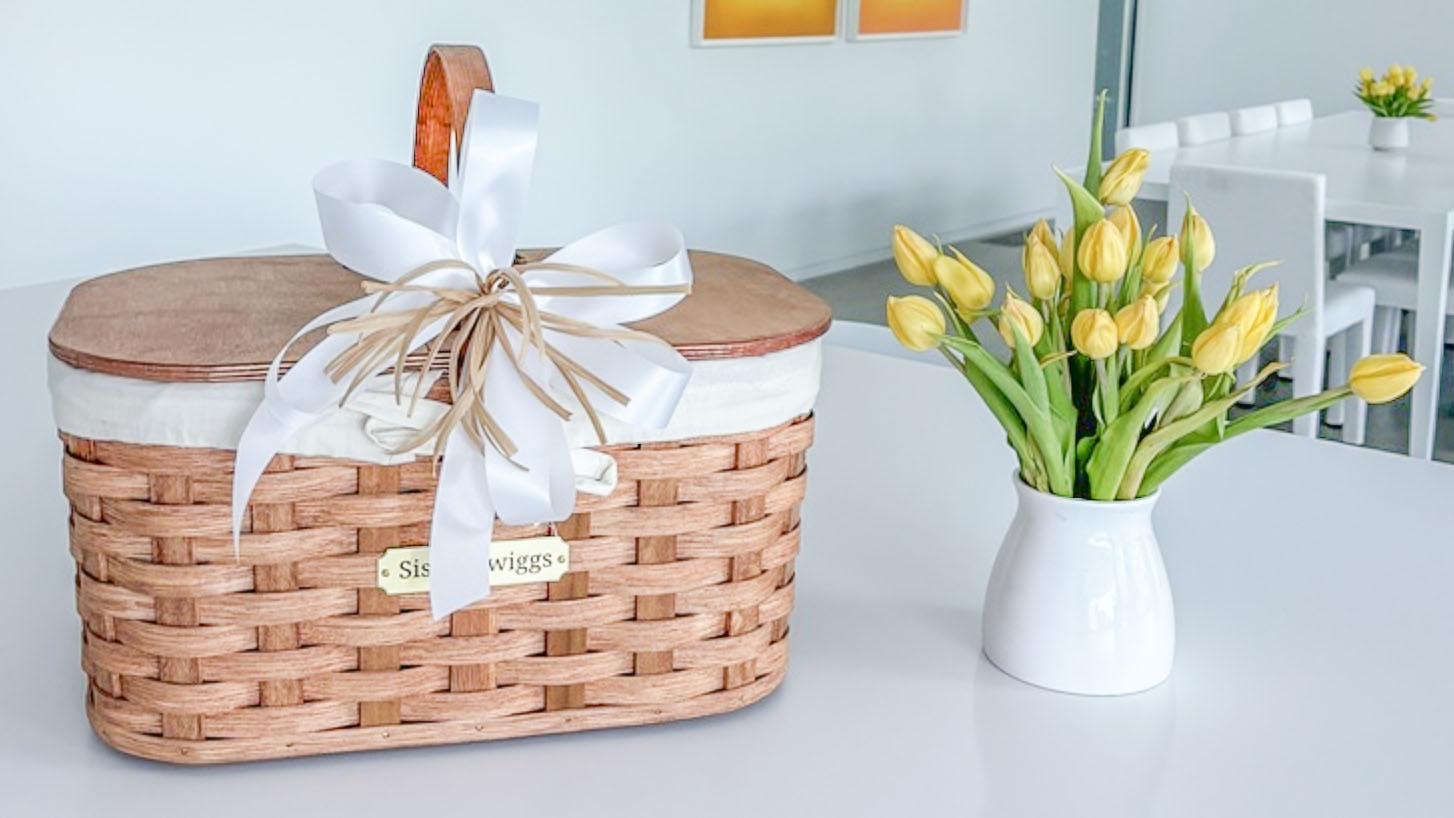
Handwoven by Amish Families
Medium Wicker Picnic Basket
“Excellent gift! Absolutely beautiful and a great gift to my clients.”