
Why Amish Schooling Ends at Eighth Grade
Warm greetings from our Amish community here in the Heartland as we settle into the final full week of January. The cold that had held steady earlier in the week deepened sharply on Friday, bringing bitter winds and temperatures below zero. While the chill settles into every corner of the countryside, the families here see it as a welcome turn. These are the days that build the thick, solid ice needed for the Winter harvest. With no insulating layer of snow on the ponds, the cold is working straight down into the water, forming the strong blocks that will be cut and stored away for the Summer months. Many families are already making plans to take a day or two next week to fill their ice houses. It is one of those quiet Winter tasks that ties the present to generations before us, a reminder that even the coldest days carry purpose.
As we continue our series on Amish education, this week turns to a topic that often sparks curiosity among those outside the community: Why Amish schooling ends after the eighth grade. It is a question asked with genuine interest, and the answers reveal much about the values that shape daily life here.
For many Amish adults, the memory of finishing eighth grade is bittersweet. One woman described feeling regretful as she left the schoolhouse, knowing she was stepping away from what she considered some of the best years of her life. Yet that moment also marks the beginning of a new chapter, one that shifts from books and desks to hands-on learning within the home and community. Ending formal schooling at that age is not seen as a loss, but as a natural transition into the work that will shape their adult lives.
Children gain something deeply practical by stepping out of the classroom at fourteen. They begin learning the work they may spend their lives doing, whether that is farming, homemaking, carpentry, cabinet making, or weaving baskets. These skills are not taught in high school, and the Amish believe that extending formal education could weaken the work ethic and heritage that are central to their way of life. Instead, parents continue the teaching at home, passing down the knowledge needed to run a household, tend a farm, or master a trade.
The first year after school ends looks different for boys and girls, but both paths are rooted in responsibility. Young women help with housework, cleaning, baking, and yardwork. Young men step into carpentry, farming, or other manual trades. These early experiences are supported by the wider community, which includes young people in frolics, husking bees, and quiltings. These gatherings are more than work events. They are social occasions that help young people feel connected, capable, and valued.
Graduation day itself is remembered with mixed emotions. Some children feel regret at leaving behind the familiar schoolhouse and classmates. Others feel relief, ready to move on to the next stage of life. But nearly all understand that their education is far from over. It simply shifts from books to life.
The Amish belief in ending school at eighth grade is rooted in both practicality and faith. As noted in widely available research, Amish communities emphasize agriculture, craftsmanship, and manual trades, and they see limited value in the abstract subjects taught in high school. They also hold religious concerns about ideas that conflict with their beliefs, such as evolution, which they prefer not to introduce to young and impressionable minds.
The Supreme Court case that protected Amish schooling, Wisconsin v. Yoder, is remembered as a turning point. It allowed Amish parents to continue educating their children in ways that preserve their heritage and align with their values. That decision affirmed the importance of teaching children the subjects most necessary for their lives within the community.
Outside the classroom, children learn a work ethic that is woven into daily life. They learn to care for animals, tend gardens, prepare meals, and help with seasonal tasks. These experiences shape their character and strengthen family life by keeping children close to home during the years when many families feel the pull of outside influences most strongly.
Stories from Our Amish Basket Weavers
Here are a few of the most notable moments from the families who weave the beautiful baskets featured on AmishBaskets.com, shared with us this week.
The Yoder Family
The Yoder home had quite an adventure this week. With the bitter cold settling in, one of their barn cats had been allowed to stay in the basement for warmth. During a trip downstairs to fetch canned vegetables, the cellar door was left open a moment too long, and the curious cat wandered upstairs. Unfamiliar with the space, it climbed onto a high shelf where the family keeps sticky fly traps out of the children's reach. The poor cat brushed against one and leapt down in a panic, sticking itself to the side of the living room desk. Loud meows brought the family running, and after a careful bit of cutting, the cat was freed and hurried back to its cozy basement spot, a little wiser for the experience.
The Mast Family
The Mast family's schoolhouse was full of cheer on Monday as the scholars surprised their teacher with a birthday celebration. The children prepared a hot lunch of homemade pizza, and the boys took turns cranking the ice cream freezer throughout the morning so everyone could enjoy fresh ice cream with their cake. They also prepared a playful "food roll," sending small gifts like apples and oranges across the floor to their teacher. The class's little house dog, who attends school each day, was startled by the rolling treats and hid under the desk until the excitement settled. Once the dog was lifted onto the desk to watch the celebration from a safe perch, it relaxed and seemed to enjoy the rest of the festivities as much as the scholars.
"Hold a grudge long enough, and you may discover it's holding you."
Amish Wisdom
Handwoven by Amish Families
Amish Barn Sale!
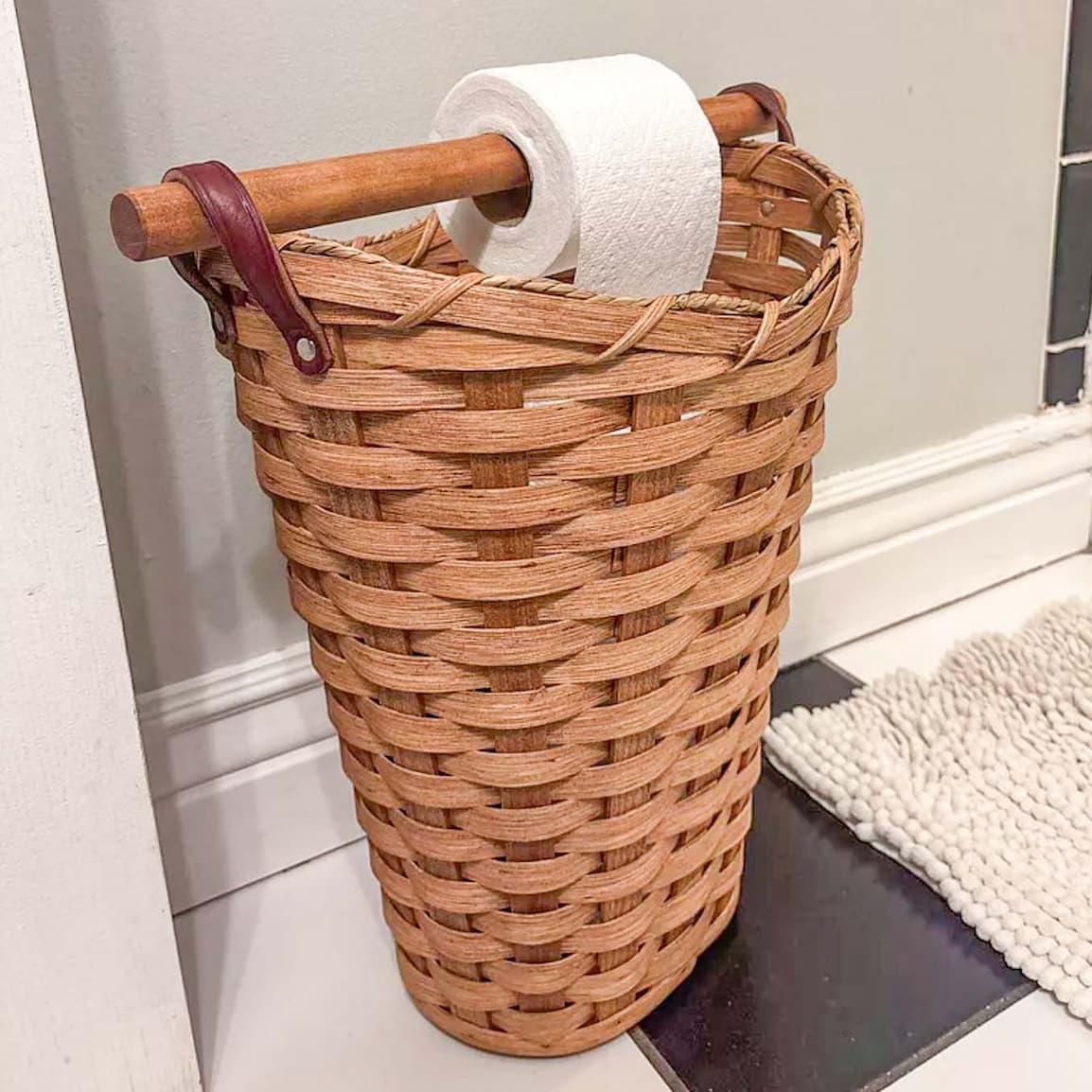
“Excellent craftsmanship, larger and sturdier than I expected - in a great way! It holds 3 large toilet paper rolls and one on the rod. It’s visually pleasing, packaging was perfect. Great price and very pleased with the purchase. Thank you!”
- Karen R (Verified Buyer)