
Preserving Sweetness & Savory Traditions
Warm greetings from the Heartland, where late August brings a gentle shift in the air and the first hints of Fall begin to whisper through the cornfields. The days are still long, but the evenings carry a cooler breeze, and the orchards are heavy with fruit ready for picking. It's a season of abundance and preparation, and in our Amish community, that means it's time to turn nature's sweetness into something that lasts.
This week, we continue our preserving series with a look at how Amish families prepare fruit, relishes, and sauces for the months ahead. While last week focused on hearty meals and protein-rich staples, this week brings a burst of flavor. Sweet jams, tangy relishes, and rich tomato sauces that will brighten Winter tables and nourish both body and spirit.
When the harvest season winds down, Amish families gather grapes, apples, pears, and peaches before the frost arrives. Peaches, in particular, are a favorite in our community. Their soft texture and natural sweetness make them ideal for canning, and many families look forward to preserving them each year.
Apples and pears are also popular, often transformed into thick, spiced butters that simmer slowly over woodstoves or kerosene burners. One woman fondly recalled her father stirring apple butter in a large kettle over an open fire, a tradition that once supported their family's small business. These days, it's Lena Mast who carries on that good work. She does more delicious apple butter than anyone in the community, and you can enjoy her special Apple Butter Here.
Without electricity, preserving fruit requires resourcefulness and patience. Woodstoves and gas campstoves become the heart of the kitchen, where fruit is cooked down and sealed into jars using time-tested methods. Some families prefer to sweeten their preserves with honey, molasses, or maple syrup instead of refined sugar, adding depth and character to each batch. These natural sweeteners not only reflect the Amish commitment to simplicity but also support local beekeepers and syrup makers, creating a quiet economy of trade and trust.
Relishes are another staple of the season. Whether it's pickle relish, zucchini relish, or sweet pepper relish, the ingredients are often gathered over time and stored in icehouses until there's enough for a full batch. The process of making relish is communal and joyful, with families sharing recipes and techniques passed down through generations. Herbs and spices are added with care, and the final product is tucked away in pantries to be enjoyed with meals or shared as gifts.
Tomato-based sauces, including pizza sauce, are also canned in preparation for colder months. These sauces are made from tomatoes grown in backyard gardens, cooked down and seasoned to taste. Once sealed in jars, they become the base for countless meals, from simple suppers to Sunday feasts.
Fruit spreads and relishes are used throughout the day in Amish households. It is spread on fresh bread at breakfast, lunch, and dinner, served during church gatherings, or added to baked goods and casseroles. Even fruit that isn't ideal for serving, selling, or trading whole finds a purpose. Bruised or overripe pieces are turned into jams and jellies, ensuring nothing goes to waste.
Preserved goods often become gifts or items of trade among neighbors. A family with extra honey might exchange it for garden produce, while another might offer jars of jam in return for help with harvesting. These exchanges strengthen community bonds and reflect the Amish belief that food is not just sustenance, but a shared blessing.
Stories from Our Amish Basket Weavers
Here are a few happenings the families dedicated to weaving the beautiful baskets featured on AmishBaskets.com have shared with us this week.
The Mast Family
The Mast family found themselves with a generous supply of cucumbers this week, thanks to a neighbor who may have planted a few too many and added a bit too much fertilizer. Buckets arrived in abundance, and before long, the Mast porch had transformed into a lively pickle station. The children helped slice cucumbers while jars of vinegar, dill, and garlic lined the counters. Neighbors stopped by to swap recipes for cucumber salad, relish, and even cucumber juice. It has become a cheerful challenge to find creative ways to use them all. The Mast family is grateful for the bounty, and their pantry shelves are steadily filling with the fruits of their labor.
The Yoder Family
After a strong wind toppled one of their red maple trees, the Yoder boys spent the afternoon cutting it into firewood this week. Thankfully, the tree fell harmlessly into the yard, missing both the mailbox and the road. It had already been weakened last winter, and its bright fall leaves made it look more like a giant lawn decoration than storm debris. David Yoder recalled planting that tree with his parents when he was a boy, making the cleanup feel bittersweet. It was one of two maples that once shaded the front yard, and now its wood will warm the same home where he grew up.
The Gingerich Family
The Gingerich family had an unexpected guest this week in the form of a stubborn cow on loan from a relative attending a funeral in another state. For three days, the Gingerich family was in charge of milking her. She was placed in a round pen to prevent her from making a run for home. Milking her was anything but routine. Each session began with roping, haltering, hobbling, and tying her up, followed by a frantic race to finish milking before she devoured her grain. If the feed ran out, so did her patience. The cow was clearly homesick and unimpressed with her temporary caretakers. When the trailer returned to take her home, the Gingerichs breathed a collective sigh of relief. She won't be missed anytime soon.
"One way to be happy ever after, is to not be after too much."
Amish Wisdom
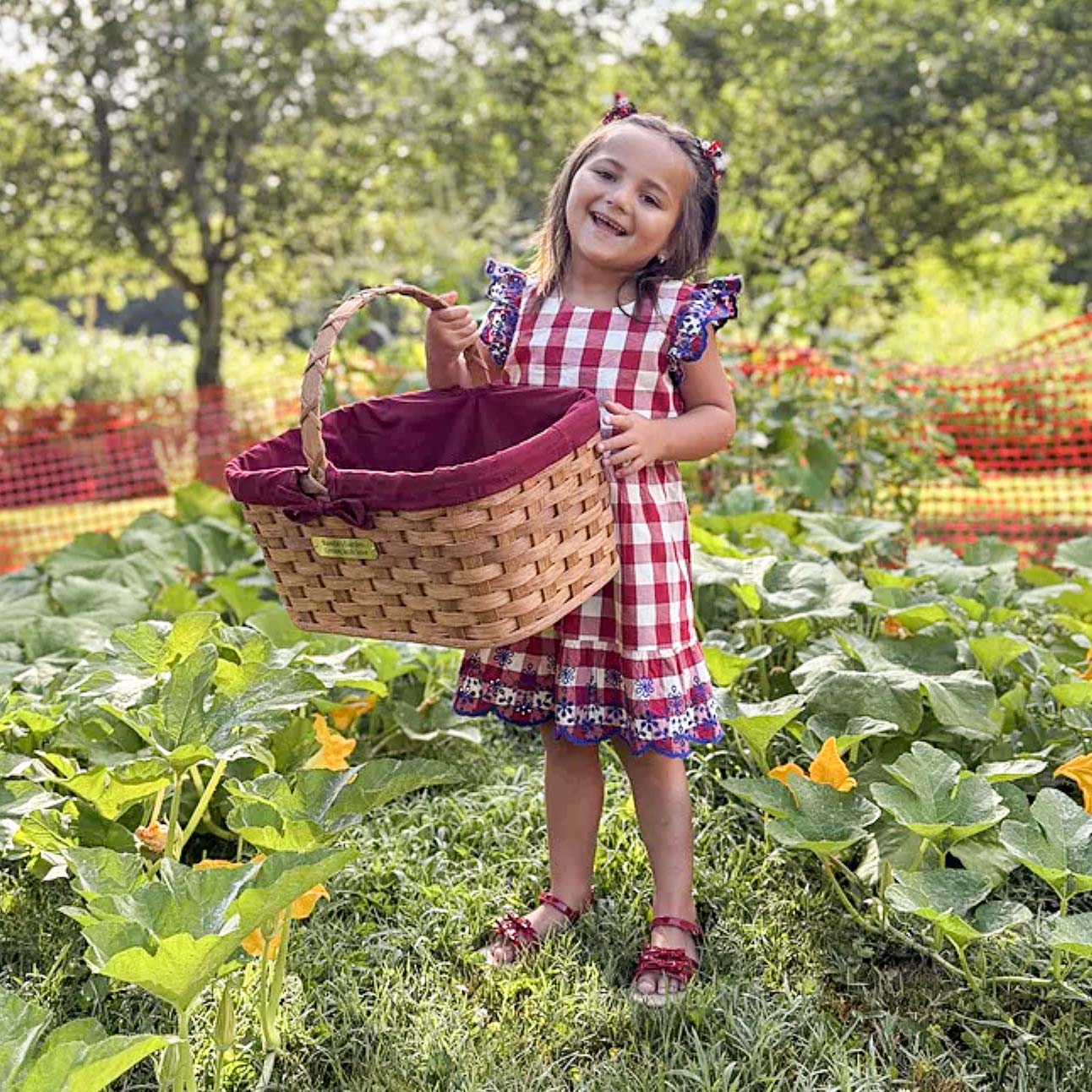
Handwoven by Amish Families
Extra Large Gathering Basket
“My daughter, Harper. She’s four years old and helped me plant our small garden this year. Four is such a great age for exploring and helping in small but meaningful ways, and a garden is the perfect place for that. She enjoys joining me each evening to check on the progress, always eager to grab the basket and see if anything is ready to harvest. It is special to share that daily ritual with her—watching things grow together, both the plants and her own excitement and responsibility. She takes great pride in collecting the produce, placing it in the basket, and carrying it back to the house. The basket is wonderfully made and definitely has helped us be able to harvest more efficiently.”
- Bianca N (Verified Buyer)