
Food Planning and Traditions
We hope this newsletter finds you well and enjoying the beautiful transition from Summer to Fall. As the leaves begin to change and the air turns crisp, our Amish community is bustling with activity, preparing for the colder months ahead. This week, we delve into the fascinating world of food planning within our Amish families, a tradition steeped in self-sufficiency and community spirit.
In the Amish community, food planning is a well thought out process that ensures families have enough to sustain them through the winter. The size of the family plays a crucial role in determining how much to plant in their gardens. Larger families naturally require more produce, reflected in the extensive gardens that are a common sight in our community. Corn, beans, tomatoes, radishes, melons, cucumbers, and red beets are among the most commonly grown crops. These vegetables not only provide variety at the family table but also serve guests and are used in community meals, such as the church's noon meal, where pickled cucumbers and red beets are a staple.
Canning is an essential part of Amish food planning. Families gauge how much they need to preserve each summer based on the previous year's consumption, always adding a few extra quarts if the family grows. This practice ensures that there is always enough food to last through the winter months. Pressure cooking is a commonly use technique to preserve vegetables and meat efficiently while cooking it. Using the pressure canning method makes meal preparation more efficient when the vegetables are used later since they were already cooked in the canning process.
The unpredictability of weather patterns poses a significant challenge to Amish gardening and food preservation efforts. Despite these challenges, the community remains resilient. When jars of canned goods fail to stay sealed or when crops yield less than expected, families come together to share their bounty. Surplus produce or meat is often sold or shared with those with less, embodying the spirit of cooperation and mutual support central to Amish life.
Butchering day is another example of community cooperation. Extended family members often come together to help, making the task more manageable and fostering a sense of unity. The number of animals raised and butchered yearly also depends on the family's size, ensuring enough meat to last through the winter.
Teaching the younger generation about gardening, canning, and butchering is hands-on. Children learn by helping their parents and grandparents, gaining valuable skills they will carry into adulthood. This practical education ensures that the traditions of self-sufficiency and food preservation continue to thrive within the community.
Faith also plays a significant role in the planning and execution of food production and preservation. Providing for one's family is seen as a duty and a way to honor God. This sense of purpose and responsibility is evident in the careful planning and hard work that goes into every aspect of Amish food production.
Here are a few happenings the families dedicated to weaving the beautiful baskets featured on AmishBaskets.com have shared with us this week.
The Mast Family
School bells rang across the community this past week, marking the start of a new academic year. The Mast family's schoolhouse welcomed an influx of eager young minds, with eight new first graders joining the ranks. This brought the total number of students to a bustling 24 across all grades. Last Spring saw only one graduate, so the school had to add seven new desks and hire a teaching assistant to manage the growing class size. The excitement of new beginnings is palpable, and the schoolhouse is buzzing with the energy of fresh faces and new friendships.
The Yoder Family
Over at the Yoder family's school, a unique and calming ritual has been introduced to the daily routine. The school teacher has started incorporating mindfulness tapping exercises at the beginning of each class. This simple yet effective practice involves tapping with both hands in a specific sequence: left, right, left, right, left, right, right, right. The exercise lasts just a minute or two and is designed to help the children focus and center themselves. Rebecca Yoder mentioned that she has also adopted this practice in the evenings, finding it a soothing way to wind down and prepare for a restful night's sleep.
The Gingerich Family
The Gingerich household has been a hive of activity this past week, thanks to a delightful discovery. They recently purchased a case of A&W Root Beer on sale, intending it as a special treat for the family. However, word of the prized pop quickly spread among the neighborhood children, sparking a playful hunt for the hidden treasure. The Gingerichs cleverly moved the root beer from the icehouse to a more secure spot under their bed, leading to two days of spirited searching by the determined kids. On the third day, the Gingerichs surprised the neighborhood children after school, each receiving a can of the coveted root beer, much to their delight. The laughter and joy shared over this simple treat created memories that will be cherished for years.
"Prayer should be our first resource, not our last resort."
Amish Wisdom
Handwoven by Amish Families
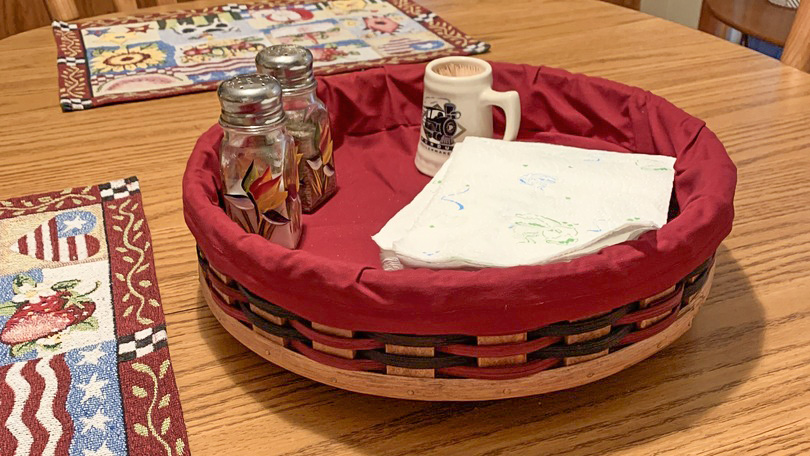
Lazy Susans
“I love the Lazy Susan. I had been looking at it for a while and the size is perfect and I love the colors. I will be ordering again. Service was very fast. Thank you for making my day.”
- Judy B (Verified Buyer)