
Amish Garden Soil Practices and Fertilization
As the warmth of Spring embraces our homes, we hope this newsletter finds you well and enjoying the perfect temperatures that March has gifted us. Our Amish community is thriving with the promise of a bountiful season ahead. This week, we continue our exploration of Amish gardening, focusing on the essential practices of fertilization and soil health.
Daily life in the Amish community revolves around a deep connection to the land, and maintaining fertile, healthy soil is paramount to successful gardening. The Amish utilize a variety of fertilizers to nourish their gardens, including Chilean nitrate, animal manure, fish fertilizer, and even Miracle-Gro. While some families opt for store-bought options, many prefer natural fertilizers such as chicken litter and horse manure, which enrich the soil with essential nutrients.
Composting is another vital aspect of soil health, with many Amish families using manure as their primary compost material. Those without hogs to feed their kitchen waste to often repurpose it in their gardens, incorporating coffee grounds, eggshells, and banana peels to boost soil fertility. Crop rotation is also a common practice, preventing soil depletion and ensuring a balanced ecosystem within the garden.
Testing soil pH levels and nutrient content is crucial for optimal plant growth. Most families in our Amish community send soil samples to Midwest Laboratories in Omaha, Nebraska, to determine the precise needs of their gardens. Certain plants, such as soybeans and cover crops like rye or peas, are particularly beneficial for soil health. These crops are broadcast in the fall and plowed under in the Spring, enriching the soil with organic matter.
To manage soil erosion and compaction, the Amish plant cover crops and maintain grass waterways. Before planting, they meticulously amend the soil by discing and harrowing it, often using a team of horses or a tiller. Off-season cover crops, including oats, turnips, rye, and radishes, may be sown in August and plowed down in the Fall to further enhance soil health.
Traditional soil remedies and practices have been passed down through generations. One such remedy is diligent weed control, as weeds can deplete soil nutrients. Manure plays a significant role in rebuilding soil health, and the Amish community is mindful of maintaining a balanced ecosystem by monitoring crop production and observing the vibrant green color of their plants.
Dealing with soil-related challenges, such as pests and diseases, requires a holistic approach. The Amish keep the pH balance in check and maintain high brix levels, or sugar content, in their plants. Pests are less attracted to plants with high sugars and are more likely to target stressed plants with lower sugar levels.
Stories from Our Amish Basket Weavers
Here are a few happenings the families dedicated to weaving the beautiful baskets featured on AmishBaskets.com have shared with us this week.
The Mast Family
Saturday turned into a community workday for the Mast family, who rallied to help friends in need. The father in the other family suffered a construction accident last Fall, leaving him with a slipped disk and using a walker. His family had fallen behind on chores, so the Masts rolled up their sleeves and got to work. They tackled a variety of fix-up jobs, both inside and outside the house. Wood piles were cut, split, and stacked in the woodshed to keep dry. Gutters were cleaned, and the roof received some much-needed attention. They even managed to plow the garden. The day's efforts were rewarded with a potluck lunch featuring spaghetti casserole, zucchini casserole, potato casserole, and roasted duck. Dessert included pumpkin chip cookies, frosted pumpkin bars, and canned pears, a delicious interlude in a productive day.
The Yoder Family
Thursday was a monumental day at the Yoder farm as the wedding bells rang. The first three days of the week were a whirlwind of activity, with the large wedding cakes being frosted and decorated. The soon-to-be-married couple prepared gifts for the cooks, adding a personal touch to their celebration. The tables were meticulously set with place settings, then covered to keep everything pristine for Thursday. Guests began arriving on Wednesday, with many more joining on the morning of the wedding. By Friday and Saturday, most attendees had departed, heading back to their homes after a joyous celebration.
The Gingerich Family
Besides attending the Yoder wedding on Thursday, the Gingerich family shared a humorous story from a relative's Amish community. They received a letter recounting a tale of a man spotted with a pink beard, causing quite a stir. The man wasn't trying to make a fashion statement; he had accidentally placed a can of paint on the woodstove to warm it up. Unfortunately, the can's bottom blew out, and the top flew off, covering him in paint. Despite the mishap, he managed to clean himself up to finish marking trees. The letter didn't mention the mess in his kitchen, but one can only imagine the chaos it must have caused.
"As the earth can produce nothing unless it is fertilized by the sun, so can we do nothing without the grace of God."
Amish Wisdom
Handwoven by Amish Families
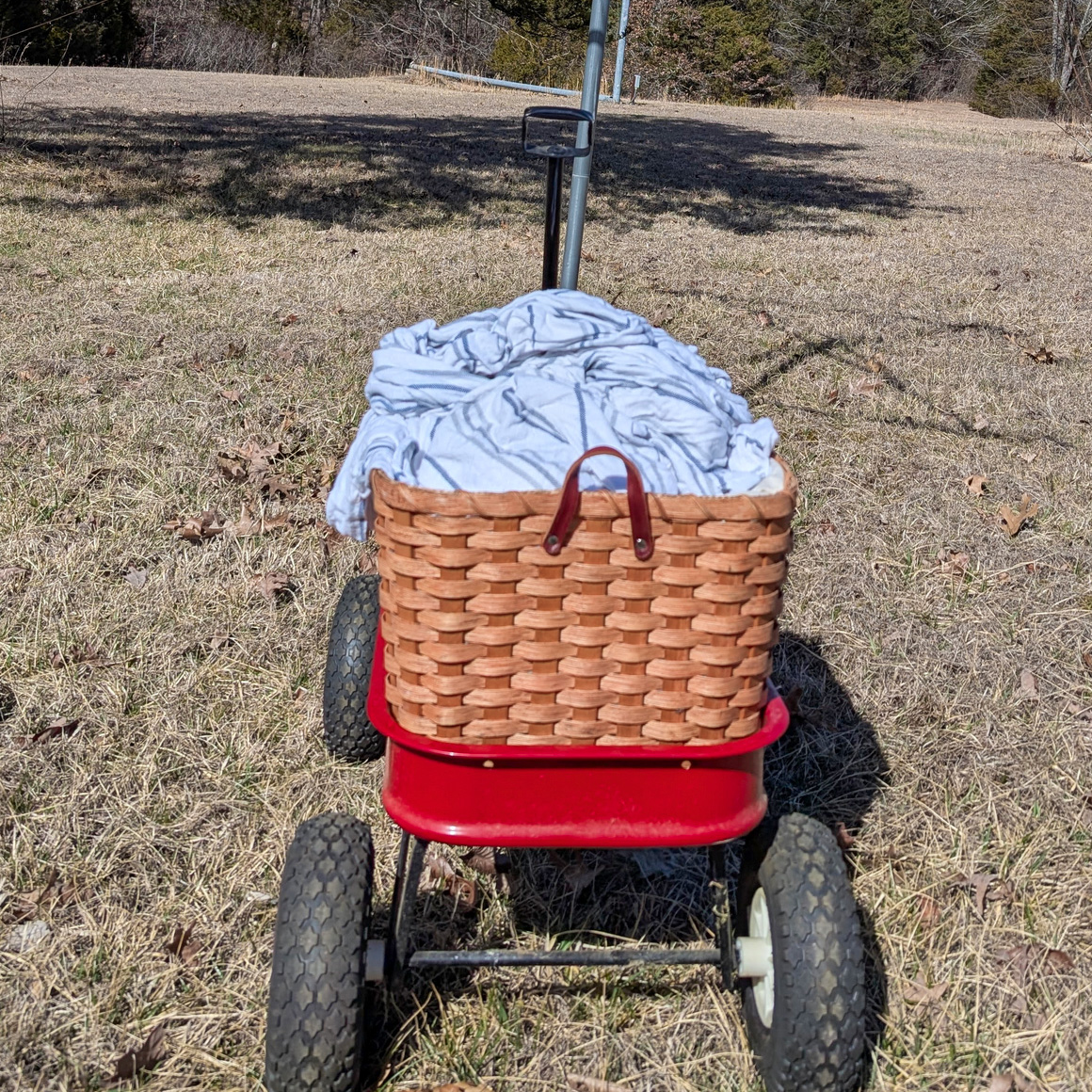
Vintage Wicker Laundry Basket
“Here I am putting my large laundry basket to good use. I love it, it's the best laundry basket I ever had. It accommodates my king sized flannel sheets and is sturdy.”
- Joy L (Verified Buyer)