
A Winter Thaw and Amish Schoolyard Play

Warm greetings from the Heartland as we move through the middle of February. The families here have enjoyed a stretch of unusually mild days, with temperatures climbing into the upper forties and even touching sixty on Monday. After the deep cold of January, this brief warm spell has been a welcome reminder that Spring is not too far away. It has also reminded everyone why the ice harvest must never be delayed. When the ponds freeze, families work quickly, because a few warm days like the ones we just had can turn solid ice into thin, unsafe sheets almost overnight. With the ice houses filled and the Winter chores mostly behind them, the community is settling into a quieter stretch of the season.
This week in our series on Amish education, we are looking at recess, outdoor play, and the simple joys that shape childhood in a one-room schoolhouse. While the lessons inside the classroom are steady and structured, the moments outside are filled with energy, imagination, and the kind of wholesome fun that has been part of Amish childhood for generations.
Recess at an Amish school is straightforward. The children spill out the door, ready for fresh air, and the games begin almost immediately. Softball is popular, and many adults still smile when they remember the excitement of being selected for a team. Another game often played is shipwreck, which works a bit like Simon Says and keeps everyone laughing as they try to follow the right commands. Some schools also enjoy a game called kick the can, a lively mix of tag and hide-and-seek that has been passed down through many generations.
Winter recess differs significantly from Summer recess. When the ponds freeze safely, the children lace up their skates and glide across the ice. Snowball fights, sledding, and building snow forts are common sights. They also play a traditional game called cut the pie, sometimes known as fox and geese, where paths are stomped into the snow to form a large circle with spokes. In the warmer months, the children return to ball games, races, and other outdoor activities that let them run freely. Many of these games resemble the classic outdoor play enjoyed by children everywhere, such as tag, scavenger hunts, and simple ball games that encourage teamwork and imagination.
Older children play an important role in helping the younger ones. They teach the rules, show them how to participate, and ensure everyone feels included. The teacher sets a few simple expectations. No secrets, no whispering, and no unkindness. If someone is eliminated from a game, they are expected to be a good sport. The golden rule guides everything. Do unto others as you would have them do unto you.
Rainy days bring their own kind of fun. Indoors, the children play "upset the fruit basket", a lively game similar to musical chairs. Imaginary play is also common, and many adults remember the pretend worlds they created with their classmates.
Outdoor chores are woven into the school year. In Winter, the children help carry wood for the stove. In the Fall, they rake leaves and twigs, often ending the day with a small bonfire and a simple wiener roast. These moments teach cooperation, responsibility, and the quiet satisfaction of working together.
Recess is more than a break. It gives the children a chance to breathe, move, and reset their minds before returning to their lessons. It also reveals much about character. By watching others play, children learn who is patient, who is competitive, who is gentle, and who is quick to help. One older Amish woman still smiles when she remembers how a certain boy always chose her as the pitcher during softball games. Small memories like that stay with a person for a lifetime.
This week, we pause our usual family updates to address a few questions from last week's email about the ice houses the families have been filling recently. Many readers were curious about how they work, how long the ice lasts, and what these buildings are made of. Since the families have been busy filling their ice houses these past few weeks, it felt like a good time to take you behind the scenes.
An Amish ice house is a simple but carefully designed building that keeps ice solid well into the warm months. Most are free-standing structures, often around 10 by 14 feet, with thick, insulated walls and tightly fitted doors. They are usually placed a short distance from the home, often in a shaded spot to help protect the ice from the sun. The design relies on passive cooling rather than electricity.
Over the past couple of weeks, the families cut blocks of ice from ponds or froze water in buckets. Once the blocks were ready, they were carried into the ice house and stacked tightly from floor to ceiling. Some communities use sawdust or straw between layers to slow melting, a practice that has been part of some families' ice storage for generations.
At the front of the building, they leave a narrow opening with its own insulated door that functions as a small refrigerator-type space. This is where they keep milk, cheese, produce, and other perishables. With the ice packed solid behind the wall separating this small area, the cool air naturally settles there, keeping food fresh well into Summer.
Ice stacked solid and high in the back door of the Yoder family's Ice house.
"No joy is complete unless it is shared."
Amish Wisdom
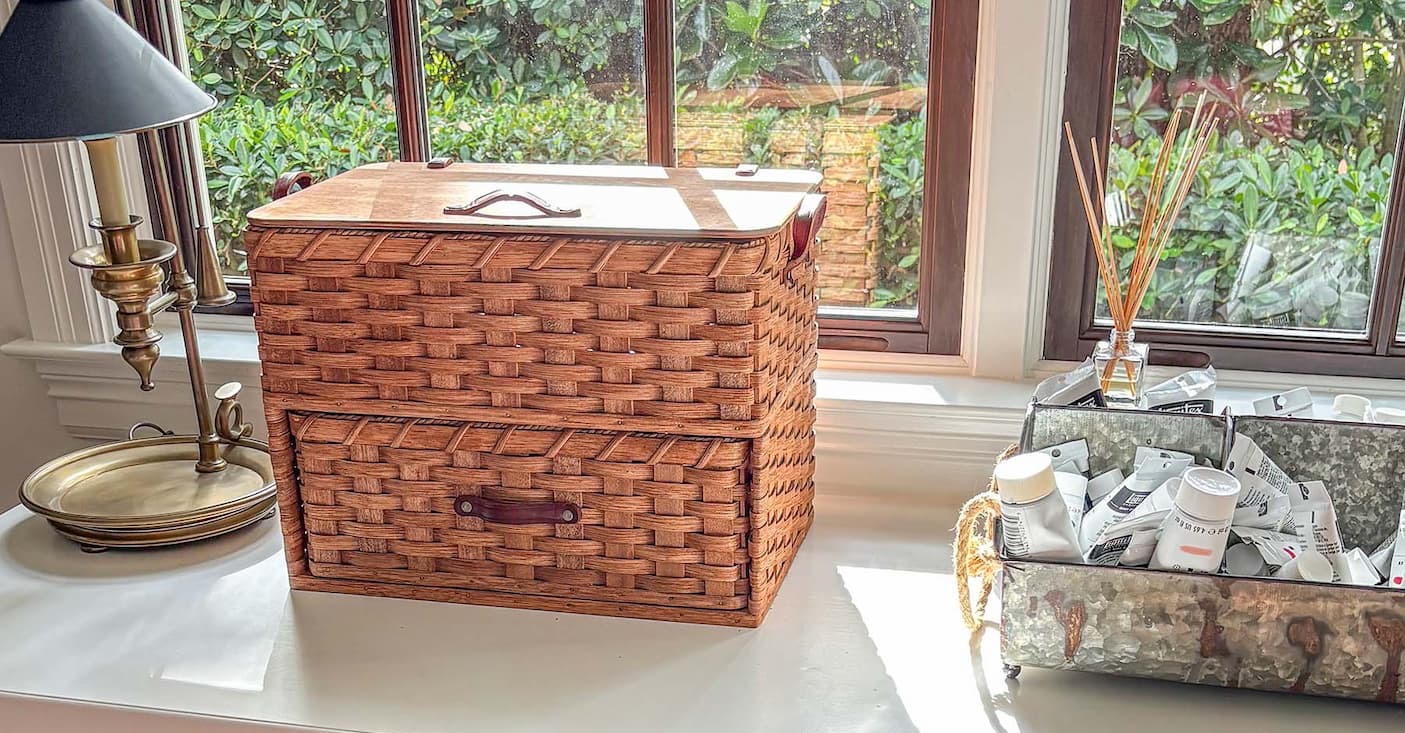
Handwoven by Amish Families
Extra Large Sewing & Craft Box
“This is my art studio, and I bought this basket to hold papers and drawings. It’s a perfect size. I love it!”
- Janet R (Verified Buyer)